Homily on the Ascension of the Lord
The Ascension of the Lord
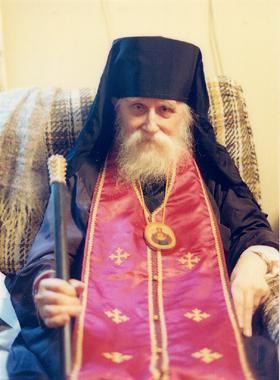
Homily From “The One Thing Needful,” Sermons of Archbishop Andrei (Rymarenko)
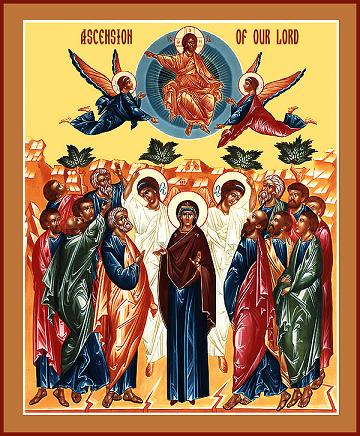
 “While He blessed them, He was parted from them, and carried up into heaven. And they worshipped Him and returned to Jerusalem with great joy”…with great joy … “and were continually in the temple, praising and blessing God” (Lk. 24:51-3).
If, during the course of six weeks, the Holy Church has been teaching us to preserve this peace which Christ granted on the first day of His Resurrection, saying: “Peace be unto you” (Jn. 20:19), then now this feeling of peace should fill our hearts. You see, this feeling of peace appears in all of us as an expectation of joy. People search for some kind of rest, some kind of com-fort. For this they travel from place to place in order to find peace. And yet this peace is within them, only in an unrevealed state. Peace is that gift which the Lord gave to us, that peace which keeps a person in a kind of unearthly state of joy. This is what the Holy Church has been teach-ing us during the six weeks of Easter: to be close to Christ, to preserve this peace, protect our-selves from those things which, entering our heart, might disturb this peace.Continue Reading
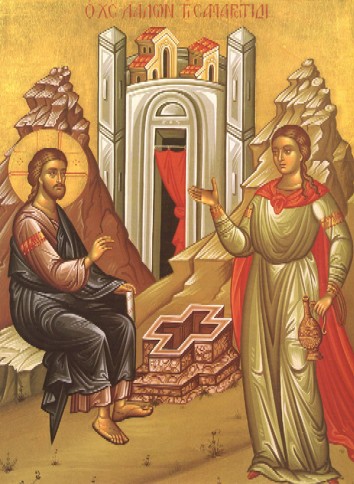
 Last Sunday, the Sunday of the Samaritan woman, the Holy Church told us how Christ raises a person from an earthly, carnal state of mind to the state in which a human being thirsts to worship God and pray to Him. You see, the Samaritan woman came to the well for physical water which satisfies only earthly thirst. But when Christ revealed her sins to her, and she ran to Him in repentance, then in her awakened spiritual thirst, the thirst for Living Water springing up into everlasting life, the thirst for communion with God, her first question was about prayer: where one should worship God, how to pray. Now today’s Gospel gives us a model for prayer.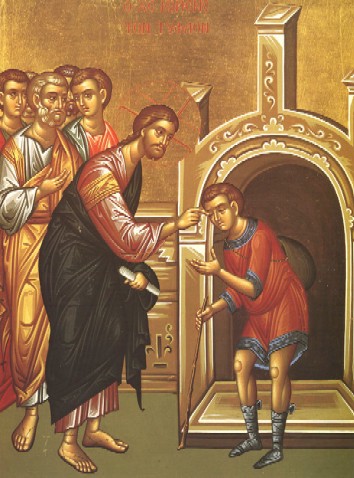
 “Jesus therefore, being wearied with His journey, sat thus on the well: and it was about the sixth hour. There cometh a woman of Samaria to draw water: Jesus saith unto her, Give me to drink” (Jn. 4:6-7). The Samaritan woman became filled with confusion and doubt of a purely worldly nature: How could He, a Jew, ask to drink from her, a Samaritan? The Jews had no dealings with the Samaritans. And even more, He said that if she knew Who He was, then she herself would ask drink from Him, and He would give her Living Water. How could He give her something to drink? Why, He didn’t even have anything to draw water with, and the well was deep.