Homily on the 25th Sunday after Pentecost
25th Sunday after Pentecost – the Merciful Samaritan.
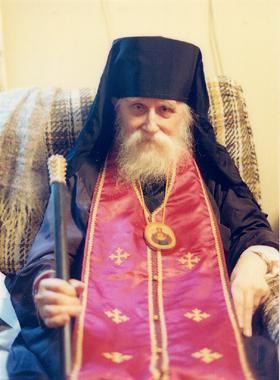
Homily From “The One Thing Needful,” Sermons of Archbishop Andrei (Rymarenko)
 “And, behold, a certain lawyer… tempted Him [Christ], saying, Master, what shall I do to inherit eternal life? He said unto him, What is written in the law? how readest thou? And he answering said, Thou shalt love the Lord thy God with all thy heart, and with all thy soul, and with all thy strength, and with all thy mind; and thy neighbor as thyself (Lk. 10:25-27).
Remember, brothers and sisters, how the Holy Church brought us to this passage in the Gospel narrative. Remember last Sunday how Jairus, a Jewish prince, came to Christ. His daughter was dying and he could find help nowhere. She was dying. And so he ran to Christ, fell at His feet and asked for help. She was dying — his only daughter. Christ went with him and Jairus walked with Christ. Maybe this was not long, but in the mind of Jairus it was the way of his whole life. He should be close by his dying daughter…but he hoped. He hoped because he believed that Christ could perform something great, could perform a healing which no one else could do. And this is like away of life.Continue Reading
 Brothers and sisters! Did you know that there exists a psychological law by which under the influence of thought, a feeling, a desire is kindled; and from desire comes action. This law was discovered back in the first centuries by the Fathers of the Church, and then it passed on into secular life. In any sphere of life, there isn’t a single action which is not provoked by feeling and desire. And in their turn, feeling and desire are kindled by thought; just as any flammable substance will catch fire if, for a sufficient length of time, one holds over it a magnifying glass through which a ray of sun is concentrated. And so: thought — feeling — action.
 Christ, surrounded by His Apostles and a multitude of people, moved toward the gates of the town of Nain. And at that time, from the town of Nain appeared a funeral procession. A young man was being carried out, the only son of a widow from Nain. Imagine the suffering of the mother: the only one, the favorite, the hope of her old age.
 Starting with the Sunday about “the talents,” the Sunday readings have been showing us how a talent (the strength given to each of us by God to fulfill His commandments of love for God and neighbor) was manifested in various Christian qualities of the human soul On the Sun-day about “the Canaanite woman” — in deep humility; on the Sunday about “the miraculous catch of fish” — in obedience to the word of God, in unshakable faith. And here in the Apostle and Gospel readings for this Sunday — in great patience in sorrows, in great spiritual comfort, and especially in the unspeakable joy which is hidden in mercy and love for one’s enemies. The last one, by human standards, appears to be unnatural; but because of the strength of the Lord’s talent, it is possible, joyous, wonderful.
 The Sunday before last the Holy Church offered for our attention the parable about the talents. A talent is that strength which God gives to us for the fulfillment of His commandments of love for God and neighbor. Last Sunday showed us the application of this talent to our life. A mother had a possessed daughter. The mother rushed to Christ: “Help me!” (Mt. 15:25). But Christ was silent. Then the Apostles started to speak to Christ, pointing out this Canaanite woman. Christ answered them: But I have come to the children. “It is not meet to take the children’s bread, and to cast it to dogs” (Mt. 15:26). The Canaanite woman cried: “Yet the dogs eat of the crumbs that fall from their masters’ table,” (Mt. 15:27). At this moment her consciousness was completely filled with humility; and in answer to this most profound humility, the Lord took pity on her and said: “O woman, great is thy faith: be it done unto thee even as thou wilt” (Mt. 15:28).