Inquirers into Orthodox Christianity within the ROCOR Diocese of Australia and New Zealand
Introduction
The time of the COVID pandemic has provided many aftershocks. Sources have noted that, for the first time in decades, the last few years have seen a general pivot towards religion across the ‘Western World’. Further, many sources have noted the sharp rise in conversions to Orthodox Christianity. While most of these sources have described the United States, we have likewise seen a dramatic increase in Australia.
Thus, the questions ought be asked: how many are converting, where are they coming from, and how may we best prepare them to ‘work out their salvation in fear and trembling’?
Methodology
Unless otherwise stated, the data in this article is from the enrolment forms for the three most recent courses of the Holy Annunciation Orthodox Church’s Catechism Course (‘HAOC Catechism’). Being an online course, it accepts enrolments from every state of Australia, with the vast majority being inquirers at ROCOR parishes in Australia. The enrolment is done through an online form, which presents a low barrier of entry. This course has prepared approximately two-thirds of the adults baptised in the ROCOR Diocese of Australia and New Zealand, which contains the largest number of English-language parishes of any Orthodox jurisdiction in Australia.
Taking into consideration each of these factors, this is a representative sample of Australians who are inquiring into Orthodox Christianity.
Who are they?
Across the three catechism courses under review, there were a total of 234 enrolment forms received: 2024-25 had 62 enrolments; 2025 had 88 enrolments; and, 2025-26 had 84 enrolments.
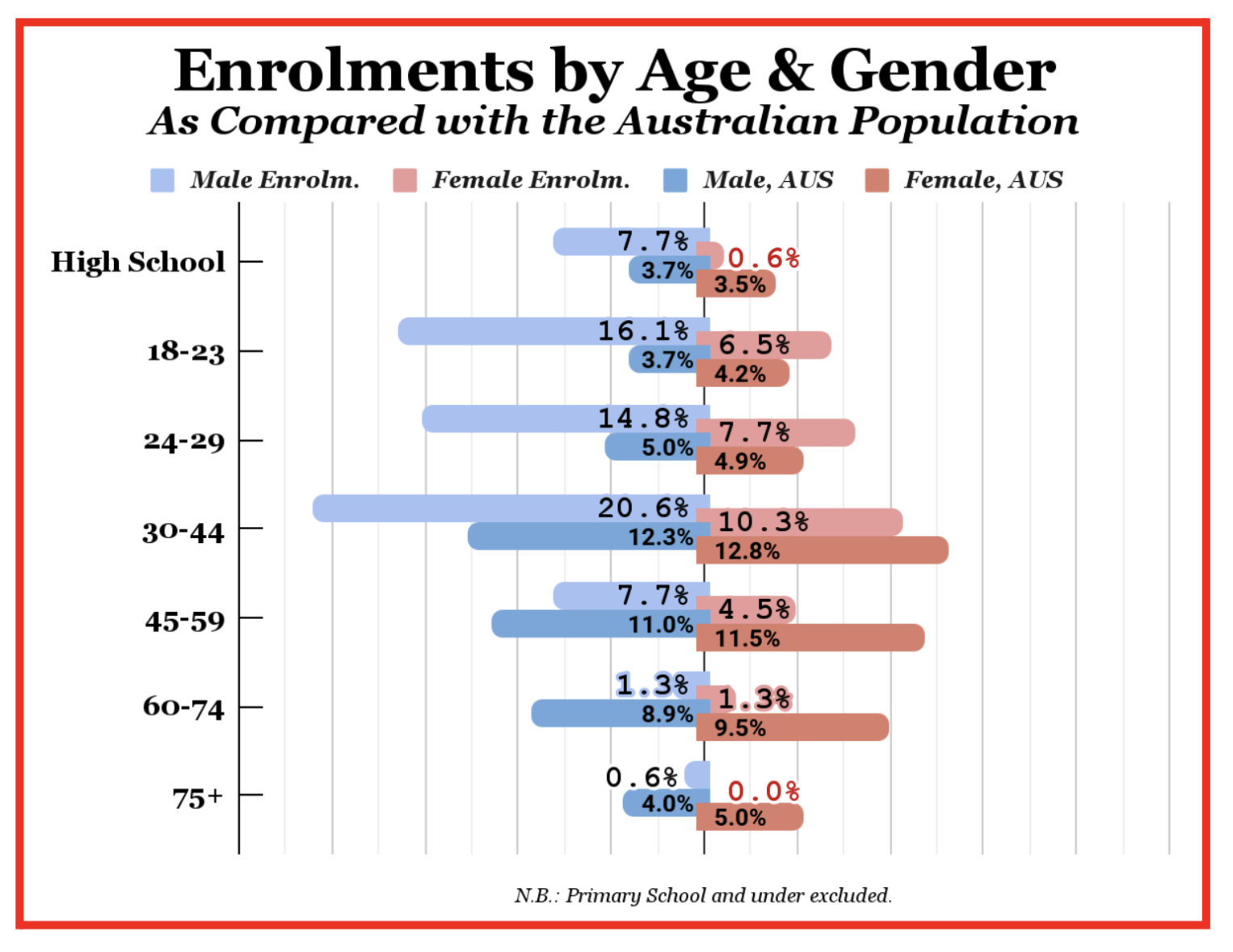
It was entirely expected that religious conversions occur during adolescence and early adulthood, and this was borne out in our data: the majority of enrolments were aged between 15-30, and much of the remainder was from those aged between 30-45.
The particular appeal of young men to Christianity in general, and Orthodox Christianity in particular, has been noted conclusively overseas. This has been affirmed in our data, with 70% of enrolments coming from men. Some have tried to argue that this is because of particular traits found in Orthodox Christianity that are attractive to men or repelling women; instead, this is following a broader social trend that ‘Gen Z’ men are turning to Christianity, while ‘Gen Z’ women are more likely to be turning away from Christianity in favour of ‘spirituality’.
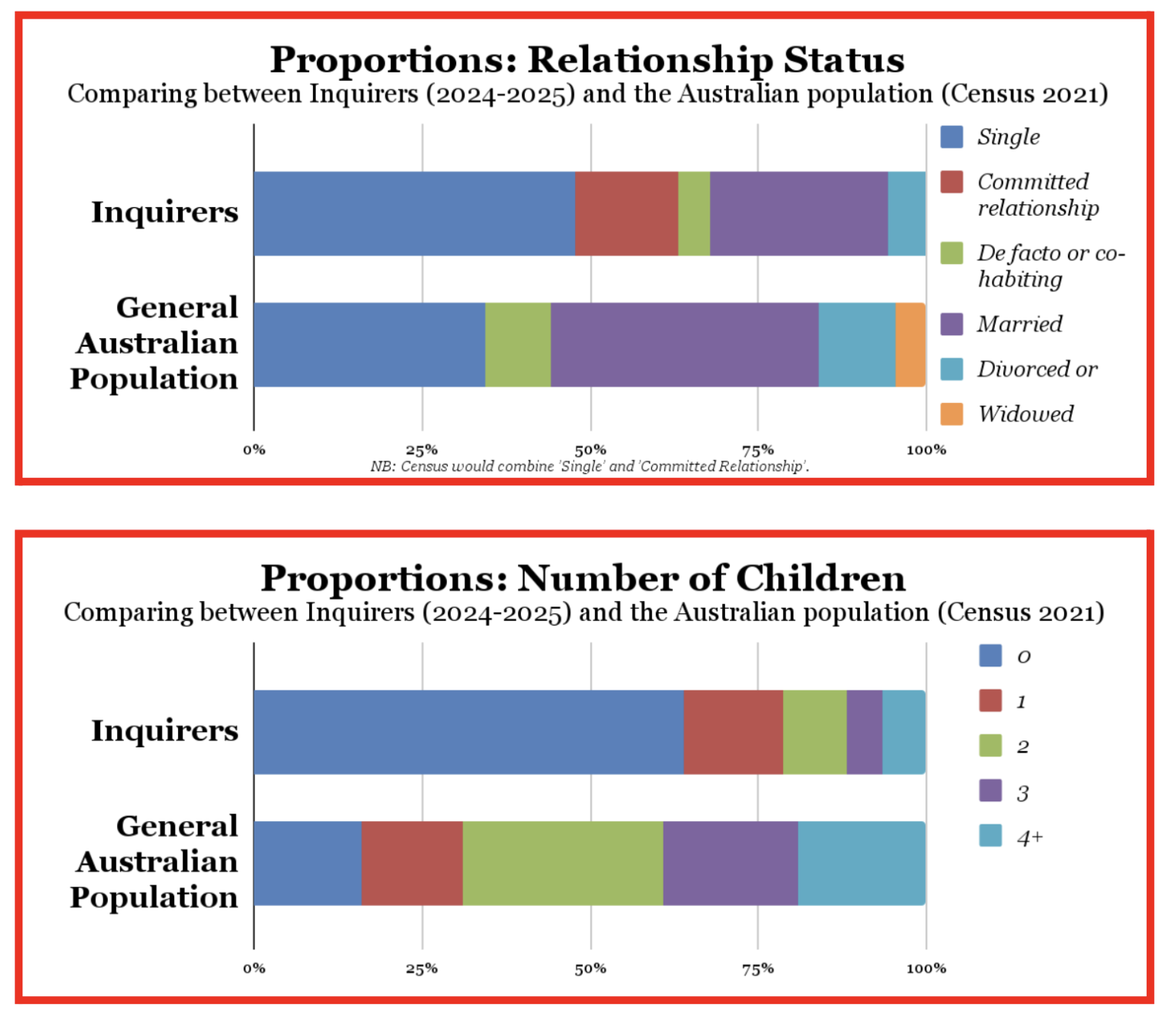
The age of enrolments, combined with the knowledge that the median age of marriage in Australia is 31-33, makes it unsurprising that two-thirds of enrolments have not been married; which also makes it unsurprising that two-thirds of enrolments do not have children.
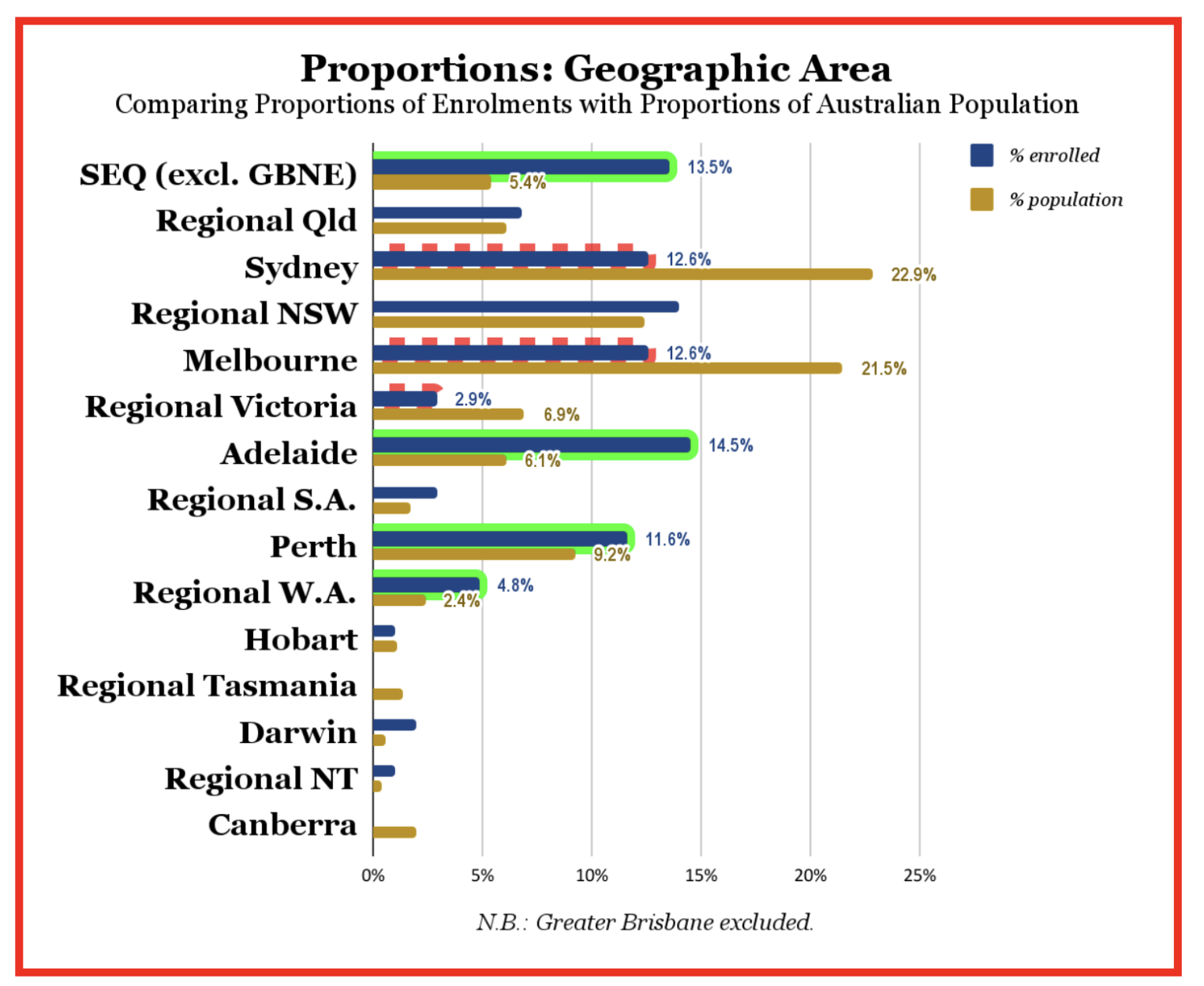
Many of the places where inquirers are coming from are proportionate to the geographic distribution of the Australian population. As expected, disproportionately high proportions are found in Greater Brisbane, home of this catechism course, where 55.6% of enrolments come from 10% of the Australian population. More curiously, other places with higher proportions of enrolments include Adelaide, Perth, ‘Southeast Queensland (excluding Greater Brisbane)’, and ‘Western Australia (excluding Perth)’.
Key Findings:
- 45% of enrolments are aged 18-29 – and 31% are aged between 30-44. This follows typical trends in religious conversions.
- Conversions from men are occurring at roughly double the rate of conversions from women. This follows social trends.
- Disproportionately high levels of enrolments were received from Brisbane, Southeast Queensland (excl. Brisbane), Adelaide, Perth, and Regional W.A.
Where are they coming from?
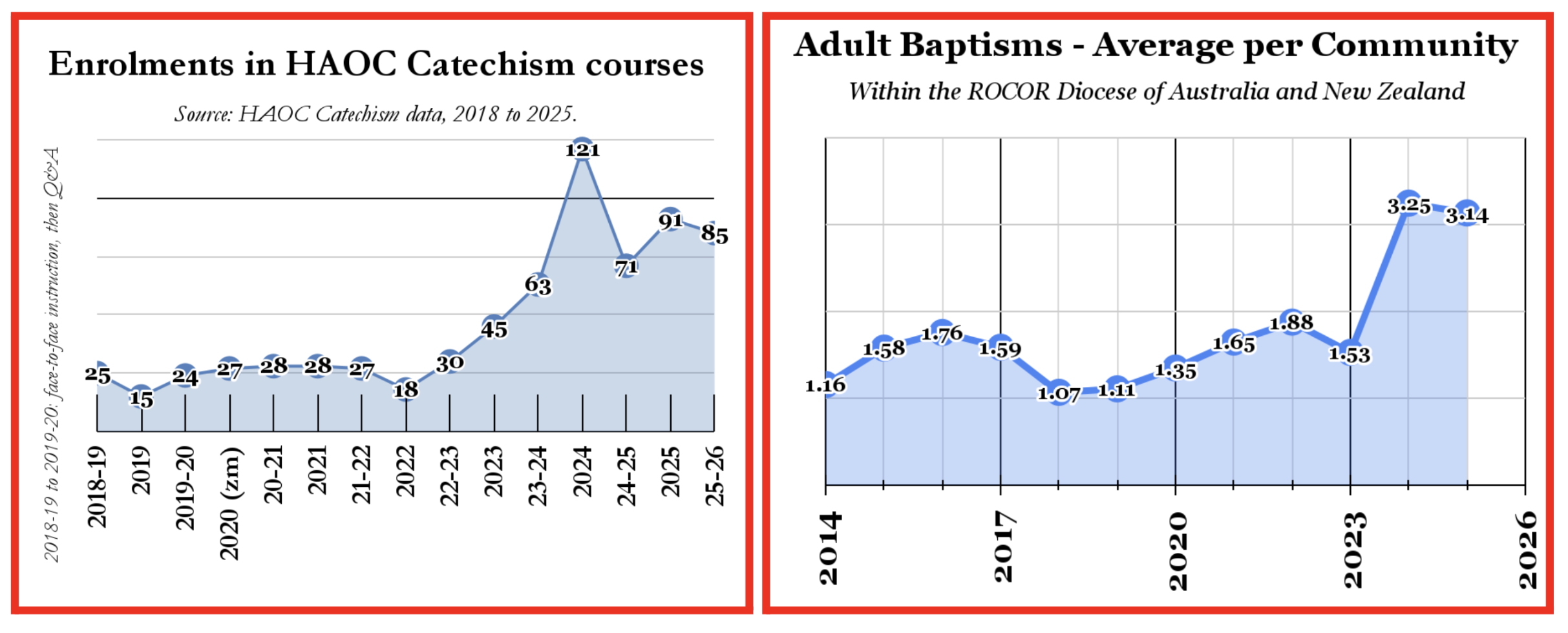
Inquiries into Orthodox Christianity have substantially increased. Anecdotally, an uptick could be noticed from 2020, likely as a result of more Orthodox content online during the pandemic. Meaningful data regarding a surge of interest begins to emerge in HAOC Catechism enrolments from 2023 onwards; this is confirmed by gradually increasing numbers of baptism from 2021 and a sharp rise in 2024.
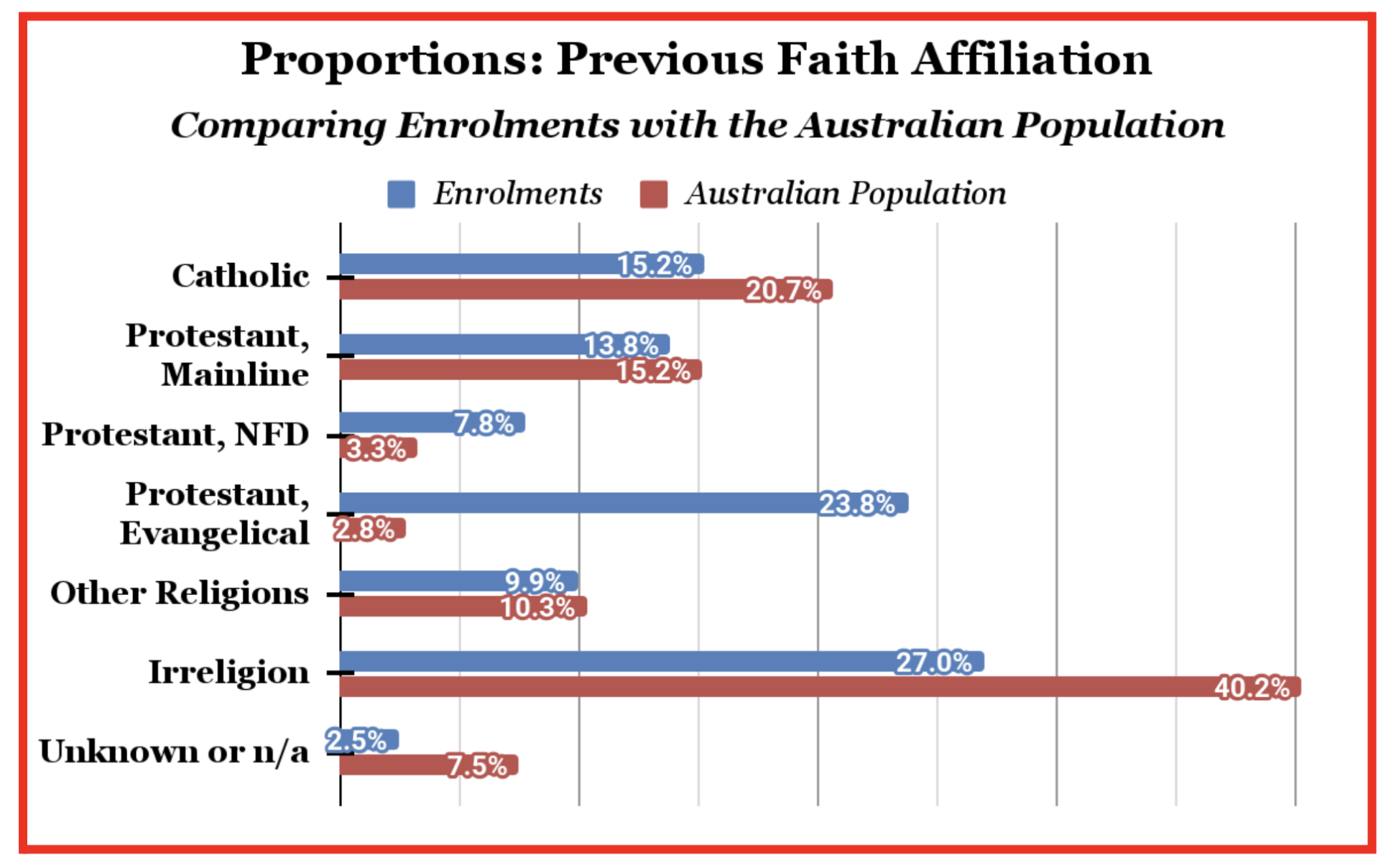
Krindatch’s 2008 study of Orthodox parishioners and parish life in the USA indicated that conversions were from: Protestant, 57%; Roman Catholic, 39%; and Agnostic, 4%. This was consistent with my 2019 study on Orthodox catechism in Australia, where 59% of adult baptisms converted from Protestantism, 37% from Roman Catholicism, and 4% from any other background.
The present sample shows that conversions to Orthodox Christianity are now much more aligned with the Australian population. Compared to previous surveys, proportions of conversions from Catholicism and Protestantism have declined – though, in the case of Evangelical Protestantism, still well above the general population. This decline in proportions of conversions is not caused by a decline in the raw numbers of conversions, but instead by the surging proportion of conversions from Irreligion and Other Religions. This likely indicates that, with the greater visibility of Orthodox Christianity online, people are more likely to inquire directly rather than via Protestantism or Catholicism.
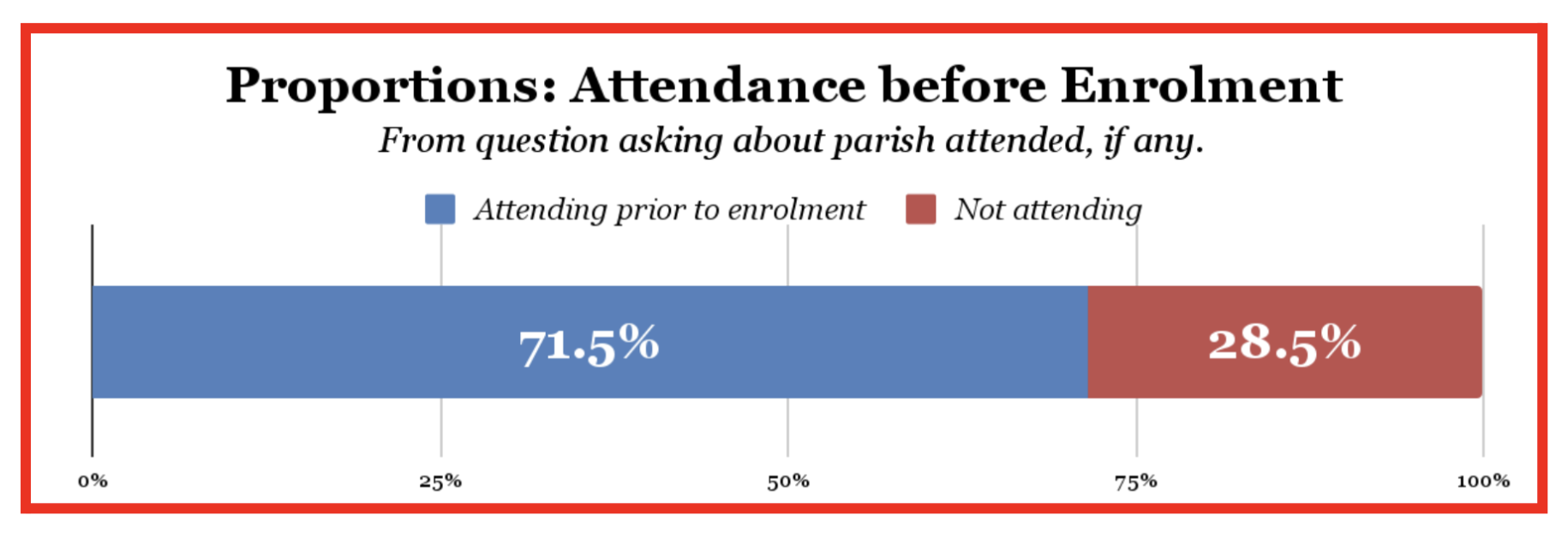
Curiously, over a quarter of these inquirers were not attending a parish prior to their enrolment. It is possible that a portion of these are experiencing Orthodoxy online while choosing not to attend their local parish – a phenomenon parallelled elsewhere. For such, it is emphasised that Orthodox Christianity is an embodied faith – and often, enrolment in the catechism is a ‘first step’ in exploring Orthodoxy, with attendance to follow. Another difficulty in Australia is the ‘tyranny of distance’ – while inquirers could be in any part of Australia, Orthodox parishes outside of state capitals are few and far between.
Key findings:
- Inquiries and baptisms have significantly increased: gradually from 2020, and then sharply from 2023.
- Inquirers continue to come from Catholicism in stable numbers, and from Protestantism in larger numbers (albeit lesser proportions).
- Many more inquirers come directly from irreligion and other religions. n.b.: Receiving those who have not been ‘churched’ will provide different challenges for clergy and parishes alike.
- 29% enrol before becoming part of a parish.
How did they find us?
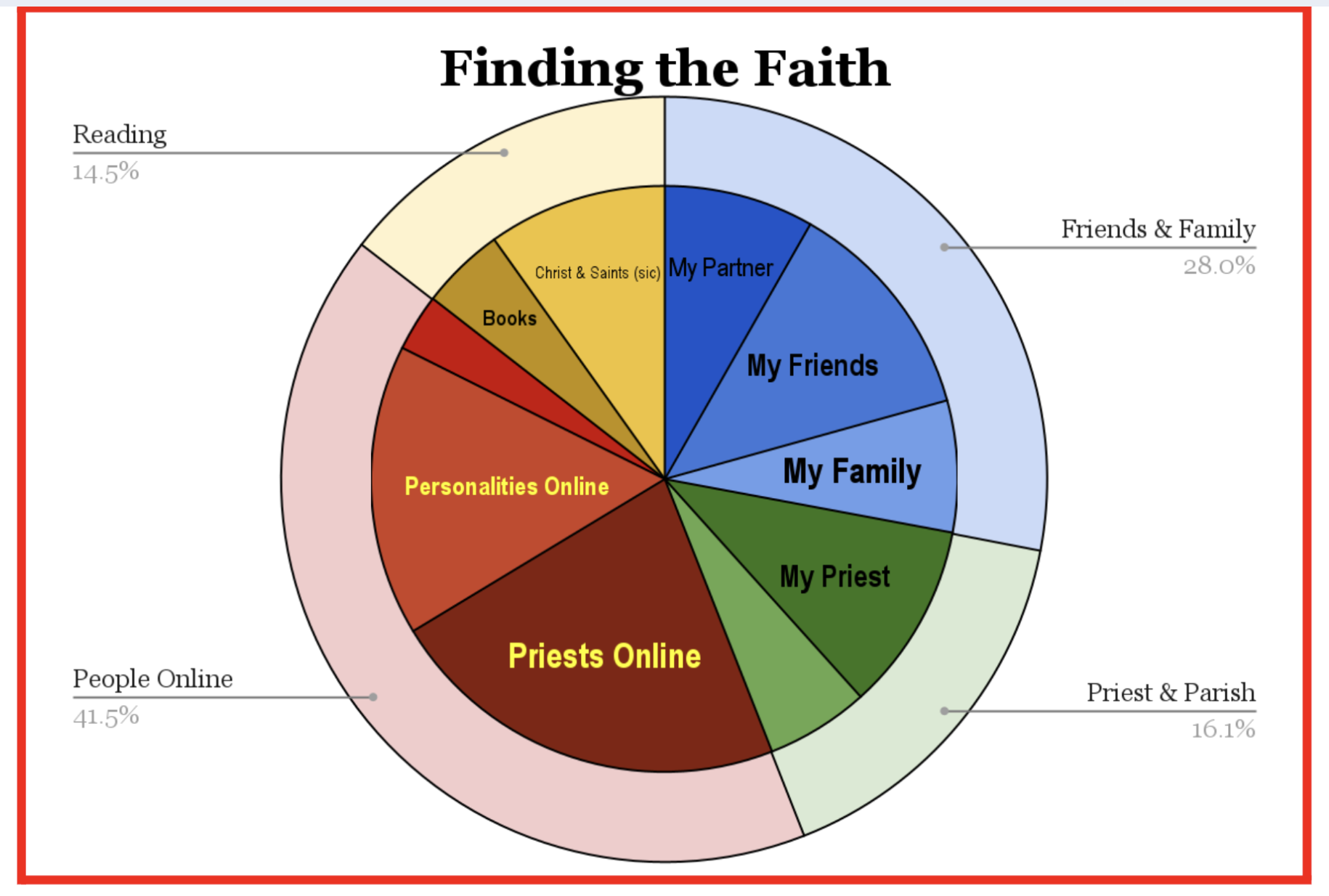
According to the inquirers themselves, there are four overarching ways that people in Australia learn about Orthodox Christianity: through the priest or the parish, through friends or family, through online personalities, and through reading and other private study.
The least of these is reading books or other prolonged accounts of Orthodox Christianity. Formerly a central means of bringing the Orthodox Faith to new horizons, the decline of reading as a pastime makes this a languishing vector.
Deliberately evangelistic activities are few and far between for Orthodox parishes in Australia; consequently, it should be of little surprise that the priest and the parish is an unlikely vector for discovering Orthodox Christianity. Given that priests are ordained to pastor, and that traditionally the bulk of the work of evangelism was done by laity – if anything, the only surprise should be that the number is so high.
A little more commonly, some people learn about Orthodoxy through their friends and family. This is more in keeping with the traditional means of learning about Christ – that is, Christians would tell other people, and invite them to also become Christian. This is likely a field that has increased, as converts tell other converts about this Pearl of Great Price.
The major addition, particularly after the COVID pandemic, is online personalities – mostly priests, but also including some laity. Not only is this a new vector, it is now also our largest single vector. Almost all of the people mentioned are overseas (mostly in the USA), which highlights the lack of local Orthodox clergy or representatives with an online presence – one that, now, necessarily includes short-form video (e.g. YouTube Shorts, TikTok, and Instagram Reels).
When looking more specifically, the top 3 pathways to learning of Orthodox Christianity account for more than 50% of all inquiries:
- 22.3% – ‘Priests Online’;
- 16.1% – ‘Personalities Online’;
- 12.4% – ‘My Friends’;
One of the challenges noted through 2025 is that discovering Orthodox Christianity needs to be followed by attending a parish. How is it, then, that a person finds their parish?
Once a person discovers Orthodox Christianity, we would anticipate that they would learn more, and then look for an Orthodox community near them that they can attend, and that they perceive as being willing to accept them – a ‘handover’ which has been noted as a challenge to overcome.
Of the three categories of pathways identified – Friends & Family, Priest or Parishes, or Online Resources – online pathways accounted for how over half of inquirers found their parish. Further, the single primary way that a person finds their parish is by searching on the internet through search engines, such as Google. No other online pathway was even close – perhaps surprisingly, the next largest online pathway was Google Maps.
Friends & Family accounted for almost a third of inquirers. Interestingly, these were primarily through friends – and otherwise, through one’s spouse or romantic partner – who were inviting to their own parish. Though perhaps initially surprising, the rareness for other family members to be pathways in finding out about one’s parish is well explained by the nature of the data, i.e. collated from adults enrolling in a catechism course.
The remainder found their parish through encounters with a priest or a parish. Most likely, this will be the parish priest, and it includes referrals of the inquirer to another parish that is more in keeping with the needs of the inquirer, including for reasons of distance, language, or predominant culture.
Thus, the top 4 specific pathways to finding out about one’s parish account for more than 70% of enrolments:
- 34.1% – ‘Websearch (NFD)’;
- 16.35% – ‘My Friends’;
- 11.4% – ‘Online (NFD)’;
- 8.5% – ‘My Partner’.
Key findings:
- ‘Online’ and ‘through friends’ are major pathways for people to discover Orthodoxy in general, and their parish in particular.
- Welcoming people to a parish requires updated details on website, social media, and any parish directories.
- Other opportunities include encouraging Australian online personalities and creating deliberately evangelistic activities.
What do we need to do?
This article has shown that a rising number of Australians are interested in the Church that Jesus founded – that is, the Orthodox Church. What can we do to receive these inquirers?
Part of the great challenge of the spread of the Orthodox faith is that it has taken place through the internet – at once a central hub for all the resources on Orthodox Christianity that one could ever want, and a place where the traditional means of authority is frequently frustrated. This can be combatted from three ways. Firstly, a Diocese or a Deanery is able to produce resources, which can be used across their Deanery or Diocese, amplifying the expertise of clergy of the Deanery or Diocese, and providing a local connection for inquirers. Secondly, a Rector is able to produce, provide, and direct towards reliable resources for their particular parish, guiding newcomers to which resources are reliable and trustworthy. Lastly, a parish website should have clear guidance and welcome for newcomers to attend services and otherwise connect with parish life, as well as collating resources for the benefit of parishioners and newcomers alike – including resources in different formats, in different languages, and for people of different worldviews.
Individual parishioners have a critical role to show the hospitality of a parish. This can begin from welcoming newcomers at the door, offering to accompany them and show them how to be in church – something that can no longer be ‘assumed knowledge’. It is beneficial to have a ready answer for why we live with a surpassing hope (1 Peter 3:15). Newcomers will have a diversity of questions, and it’s not necessary for every parishioner to know every answer for complicated topics – but all are able to introduce a newcomer to someone who can answer the question. For those who wish to go beyond this hospitality, a parishioner is able to share parish events or their own experience of faith on social media, encouraging people to experience it for themselves. Further, parishioners are able to invite those who show interest – friends, coworkers, neighbours – to experience church services, and even to coffee or lunch afterwards.
The Rector has a vital role in responding well to inquirers. He must ensure that there is clarity on the process for preparing to be baptised, including regular check-ins for guidance and Q&A, a structured catechism course, and a lengthy attendance as a normative prerequisite to baptism. Beyond baptism, the Rector’s work continues in providing the discipleship and mentoring that typically happens during regular Confession. To best teach newcomers, he needs to create approachable educational series’ in which the Faith is taught clearly, presuming no prior knowledge. Lastly, the Rector is able to connect newcomers with people in the community who are able to be mentors for young adults.
Those responsible for parish management have a great impact on whether a newcomer becomes part of the congregation. It is important to provide for young adults to grow in their faith – social, service, and mentoring. The newly-made catechumens should be celebrated, while newly-baptised need to be incorporated and made volunteers – with metrics evaluated to ensure no one ‘slips through the cracks’. Periodically, it would be beneficial for those managing the parish to review the parish’s online presence to ensure that it continues to be accurate and welcoming for non-members.
A Diocese or a Deanery experiencing an influx of inquirers is uniquely able to respond to the challenge at hand. Seeing more people being catechised at a distance from any existing church, the need to establish missions or outreaches is clear. To do this, and to care for newcomers to existing parishes, more priests and deacons will need to be ordained. Over time, some of this problem may solve itself, with today’s newcomers being tomorrow’s ordinands; in the meantime, this will raise questions around the proper formation of clergy, and what requirements ought be met.
Conclusion
It is a great joy that the Orthodox Church in Australia is receiving more inquirers than ever before. We will need more clergy, and parishes in more places. We will need quality resources, accurate websites, clear paths to baptism, and comprehensive catechisms. We will need ongoing discipleship and to assess parish engagement. Lastly, we will need kind individuals to welcome our newcomers, becoming bridges into our communities. As God has granted us this influx, we pray that we be given all that is needed to welcome others to likewise follow Him.
About the Author
Priest Andrew Smith, M.T.S., is the Rector of Holy Annunciation Orthodox Church, and additionally serves the ROCOR Diocese of Australia and New Zealand as Diocesan Statistician and as Chair of the Committee for Diocesan Evangelism. His postgraduate research was on catechism, and he has written and presented on conversion, enculturation, and other missiological topics. His past academic works may be found at: https://divinity.academia.edu/FrAndrewSmith
Footnotes
- The author wishes to thank Fr Pavel Baksheev, who provided the initial inspiration to write this article; m.Sarah, who supported its writing; and all those who have participated in the HAOC Catechism.
- For example: Jessica A Johnson, “Gen Zers make pivot back to faith”, 26 February 2024, https://www.minotdailynews.com/opinion/national-columnists/2024/02/gen-zers-make-pivot-back-to-faith
- For example: Aurelian Iftimiu, “Young Finns are increasingly converting to Orthodoxy”, 16 April 2024, https://basilica.ro/en/young-finns-increasingly-converting-to-orthodoxy-says-finnish-abbot; Namee et al, Orthodox Studies Institute, “Converts to Orthodoxy: Statistics and Trends from the Past Decade”, July 2024, https://resources.finalsite.net/images/v1721762028/saintconstantineorg/fxh1s6pimhcz1meytbyg/convertstudy1_final.pdf
- The HAOC Catechism is a twice-yearly catechism that operates through a ‘flipped classroom’ model, with 17 sessions, each comprising a video on YouTube, a weekly Q&A via teleconference, and a revision task.
Source: Holy Annunciation Orthodox Church, “Entering the Kingdom: The Catechetical School of Holy Annunciation Orthodox Church, Brisbane”, as at May 2025, https://www.HolyAnnunciation.net/Catechism - Fr Andrew Smith, “State of the Diocese based on the Diocesan Survey, 2013-2025”, presented at the 21st Diocesan Assembly of the ROCOR Diocese of Australia and New Zealand, Strathfield, October 2025.
- Parish directories available online. At the time of writing, this included 18 English-language communities, including: 8 in the ROCOR Diocese; 5 in the Antiochian Archdiocese; 3 in the Greek Archdiocese; 1 each in the Serbian Metropolitanate and the Romanian Episcopate; and none in the Macedonian Dioceses, the Ukrainian Consistory, the Bulgarian Diocese, or under the Moscow Patriarchate.
- A small number were two-person enrolments (e.g. for a couple, or a parent and child, who were doing the course together); however, only the enrolment forms were considered.
- For example: Cosmo Adair, “The Mystery of Britain’s Orthobros Why are young men flocking to the Eastern Church?”, 26 December 2025, https://unherd.com/2025/12/the-mystery-of-britains-orthobros; Lucy Ash, “Young US men are joining Russian churches promising ‘absurd levels of manliness’”, 25 May 2025, https://www.bbc.com/news/articles/c30q5l8d4lro; Trevin Wax, “Is Eastern Orthodoxy the Next Big Thing for Young Men?”, 7 January 2025, https://www.thegospelcoalition.org/blogs/trevin-wax/eastern-orthodoxy-young-men; Rikki Schlott, “Young men leaving traditional churches for ‘masculine’ Orthodox Christianity in droves”, 3 Dec 2024, https://nypost.com/2024/12/03/us-news/young-men-are-converting-to-orthodox-christianity-in-droves/
- Corinna Robinson, “Convert crisis? Clergy, scholars weigh in on ideological concerns”, 24 November 2025, https://orthodoxobserver.org/conversion-crisis-concerns-mount-over-ideology-amid-u-s-orthodoxys-new-growth/
- For example: Shalailah Medhora, “Why more Australian Gen Z men are finding meaning in organised religion”, 6 December 2024, https://www.abc.net.au/news/2024-12-06/gen-z-religion/104690496; The Barna Group, “Gen Z Women Struggle to Find Their Place in Christian Faith and Community”, 13 October 2025, https://www.barna.com/trends/gen-z-women-struggling-in-faith; Sophie Hills, “America’s changing pews: Who shows up at church on Sunday?”, 13 January 2025, https://www.csmonitor.com/USA/Society/2025/0113/religion-young-men-church-services
- Based on 2023 figures, the median age for first marriage is 32.9 for males and 31.2 for females: Australian Bureau of Statistics, “Marriages and Divorces, Australia: National and state statistics on marriages and divorces, including same-gender couples”, 16 August 2024, https://www.abs.gov.au/statistics/people/people-and-communities/marriages-and-divorces-australia/latest-release
- N.B.: data on age was not collected in 2024-25; this statistic is from the 2025 and 2025-26 courses.
As a curiosity, men who are aged 15-30, unmarried, and childless comprise the same number of enrolments as all women who enrolled – albeit a sizeable minority of men. - Areas with low rates would require further research – including, whether parishes in these areas use their own catechism course, or are in different jurisdictions entirely – before making conclusions about rates of conversions in these areas.
- n=936 parishioners, from the Greek Orthodox Archdiocese of America and the Orthodox Church in America, with indications for ‘cradle’ and ‘convert’ (of various backgrounds). Being as the former was five times larger, the percentages were weighted accordingly. Alexei D. Krindatch, The Orthodox Church Today: A National Study of Parishioners and the Realities of the Orthodox Parish Life in the USA (Berkeley: Patriarch Athenagoras Orthodox Institute, 2008), page 12, https://orthodoxreality.org/wp-content/uploads/2020/03/OrthChurchTodayFullReport.pdf
- n=44 converts at ROCOR parishes in Australia. Fr Andrew Smith, Making, Baptising and Teaching Disciples: A Survey of the Impact of Catechesis on Religious Affiliation in Eastern Orthodox Christianity, p20. https://www.academia.edu/39118138/Making_Baptising_and_Teaching_Disciples_A_Survey_of_the_Impact_of_Catechesis_on_Religious_Affiliation_in_Eastern_Orthodox_Christianity
- n=234 enrolments in the HAOC Catechism.
- For example: Krysta Fauria, “Converts are finding Eastern Orthodoxy online. The church wants to help them commune face-to-face”, 12 December 2025, https://apnews.com/article/young-converts-online-eastern-orthodoxy-eef496dcd83a061d90a0b7aba33b6113
- Each catechism course begins with the statement that the catechism course is only a part of the overall pre-Baptismal preparation – the remainder normatively being church attendance, community integration, practice of spiritual disciplines, and an extended period of time.